 MileMind
Buying & selling
UK number plate change: what the 76 plate means
The 76 plate lands on 1 September. What it means, whether it's worth waiting, and the rules that carry a £1,000 fine.
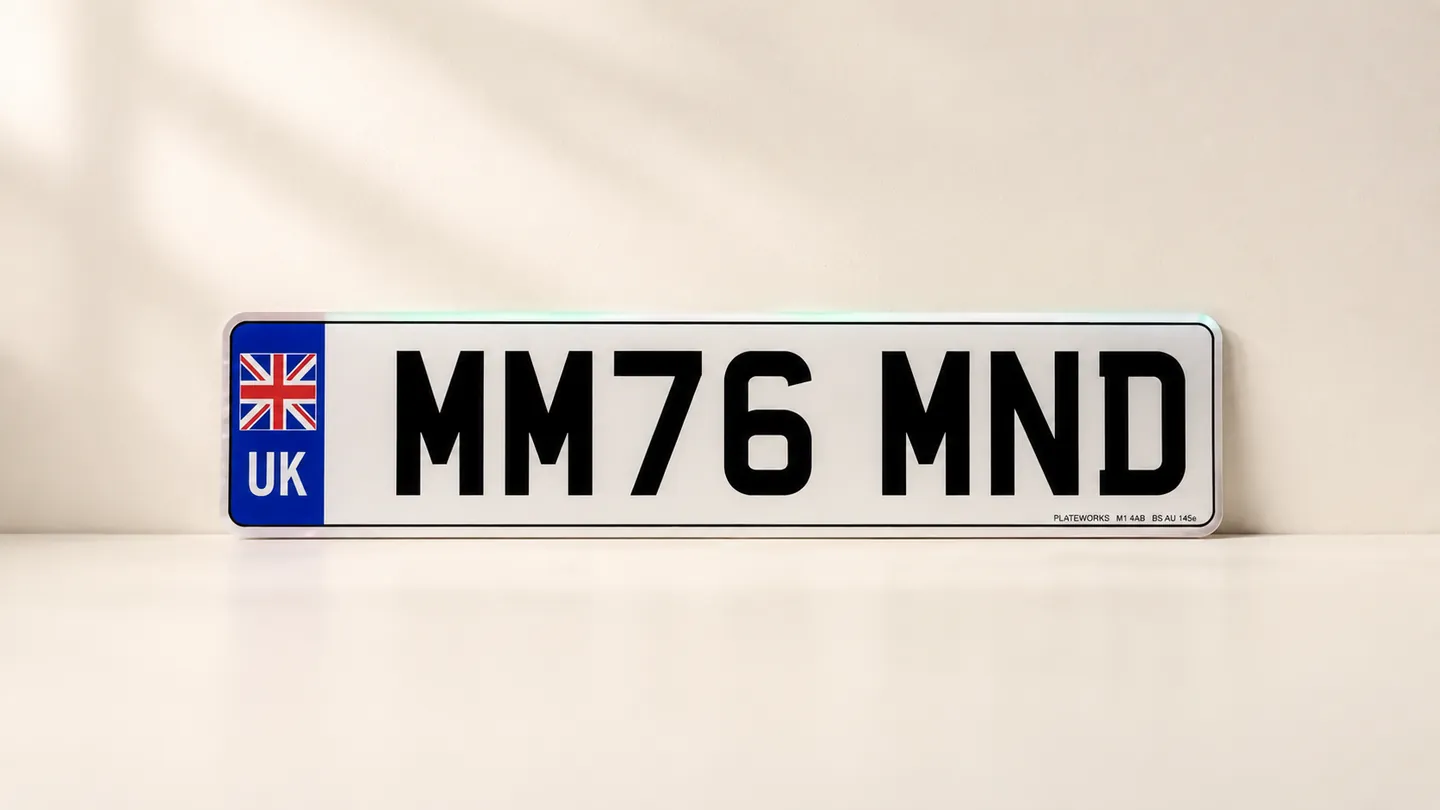
On 1 September 2026, every new car registered in Britain starts wearing a 76 plate. Here's what that actually means — for what you pay, for what your current car is worth, and for the plate rules that quietly carry a £1,000 fine.
Plate-change day is the closest thing the car world has to a season finale. Forecourts fill up, dealers push hard, and a lot of drivers spend August wondering whether they ought to wait. It's worth understanding properly, because the two digits on the front of a car change more than how new it looks.
How the system works
A standard registration looks like AB76 CDE and comes in three parts:
- Two letters — the area code, showing where the car was first registered.
- Two numbers — the age identifier. This is the bit that changes twice a year.
- Three letters — random, purely to keep every registration unique.
The age identifier follows one simple rule. Cars registered from March take the year itself. Cars registered from September take the year plus fifty. So 2026 gives you 26 in March and 76 in September. The format has run since 2001, and the twice-yearly changeover since 1999.
| First registered | Plate |
|---|---|
| September 2025 – February 2026 | 75 |
| March 2026 – August 2026 | 26 |
| September 2026 – February 2027 | 76 |
| March 2027 – August 2027 | 27 |
The 76 plate runs from 1 September 2026 to 28 February 2027.
The quirk worth knowing. A September plate straddles two calendar years. A 76-plate car might have been registered in September 2026 — or in February 2027, five months later. When you're buying used, the plate is a clue to a car's age, never proof of it. Check the first registration date on the V5C.
One thing that catches people out: this is a Great Britain system. Northern Ireland uses its own dateless format — three letters and up to four numbers — with no age identifier at all, so an NI-registered car never tells you its age from the plate.
What actually changes on 1 September
For the car already on your drive: nothing at all. Your registration stays exactly as it is for the life of the car. The change only applies to vehicles registered for the first time on or after that date. Nobody has to do anything, and there's no paperwork coming.
Is it worth waiting for the 76?
September is the second-busiest month of the year for new car registrations after March, and has historically accounted for something like a sixth of the whole year's sales. That concentration pulls in two opposite directions, and both are genuinely valid:
- Waiting for the 76. You get the newest identifier on the road, which reads as newer to a buyer for longer and tends to protect resale value a little further down the line.
- Buying the run-out 26 in August. Dealers want the outgoing-plate stock gone before the new registrations land, which is exactly when pre-registered cars and sharper discounts appear. Mechanically it's the same car.
The honest version: the difference between a 26 and a 76 is at most six months of age. If you keep cars for years, take the August discount — the plate matters less with every year you own it. If you change car every three years and part-exchange value is central to the sums, the newer plate genuinely does hold on to a bit more. Either way it's worth reading alongside how car depreciation actually works, because the plate is only one small input into a much bigger number.
The costs that arrive with a new plate
If you're buying new in September, a few 2026/27 figures are worth having in front of you — not least because most of them get folded invisibly into the on-the-road price.
| Cost | 2026/27 |
|---|---|
| First-year road tax (VED), by CO₂ | £10 – £5,690 |
| Standard rate, from year two | £200 a year |
| Expensive car supplement, years two to six | +£440 a year |
| A car over the supplement threshold, years two to six | £640 a year |
UK VED rates for the 2026/27 tax year. The first-year rate depends on CO₂ emissions; a zero-emission car pays £10.
The one that catches people out is that supplement. It applies to any car with a list price over £40,000 — or over £50,000 for a zero-emission car since April 2026 — and it runs for five years, years two to six. That's £2,200 in total, on top of the standard rate.
Mind the £40,000 cliff. The test is the manufacturer's list price including factory options, not what you actually paid. Haggling a £41,000 car down to £39,000 doesn't help. Ticking one more option box on a £39,500 car can cost you £2,200 over the following five years — so ask the dealer for the exact list price before you spec it.
Then there's everything that follows the car home: insurance, fuel, servicing, and the value it sheds in year one. Depreciation on a brand-new car is comfortably the biggest of those, and it's the one that never arrives as a bill. If you haven't added it all up before, what a car really costs to run is the fuller picture.
The plate rules that catch people out
The physical plate is regulated far more tightly than most drivers realise. Any plate made since 1 September 2021 has to meet the British Standard BS AU 145e, which means:
- The Charles Wright font only, with characters 79mm tall and fixed spacing. You can't squeeze or shuffle characters to spell a name.
- White reflective front, yellow reflective rear, with solid black characters and no background pattern.
- The supplier's business name and postcode, plus the BS AU 145e mark, shown on the plate itself.
- No tinted covers or coatings that make the plate harder to read — by eye or by an ANPR camera.
- The rear plate lit at night, and both plates readable from 20 metres.
Raised 3D and laser-cut 4D plates are perfectly legal despite the rumours, as long as they tick everything above. A zero-emission car can also carry the optional green flash down the left-hand edge. Get any of it wrong, though, and it's a fine of up to £1,000, an MOT failure, and in serious cases the registration can be withdrawn altogether. Since the MOT is one of the dates on every driver's renewal calendar, a cheap novelty plate has a habit of resurfacing as a failure at the worst possible moment.
Private plates, and the one hard rule
Plenty of people time a private plate around a new car, so the mechanics are worth knowing:
- Buying. Straight from the DVLA you get a V750 certificate of entitlement; from another owner you get a V778 retention certificate.
- The fee. It costs £80 to take a registration off a car and put it on retention. Assigning a registration you already hold to another car is free.
- The certificate. A V778 lasts ten years and can be renewed. Let it lapse and the registration is gone for good.
- Finance. You can't retain a registration from a car with outstanding finance until the agreement is settled.
- New cars. If your 76-plate car is coming from a dealer, they can usually handle the assignment for you before you collect it.
And the rule that trips people up every September: a private plate can hide a car's age, but it can never make a car look newer than it is. You can't put a 76 registration on a 2019 car. Dateless plates are the exception — they carry no age identifier at all, which is precisely why they cost what they cost.
Retain before you sell, not after. The moment the car changes hands, the registration goes with it. Take the plate off first, wait for the DVLA to confirm and the new V5C to land, and only then sell. Reclaiming a cherished plate from a new owner afterwards ranges from difficult to impossible.
If you're leasing
A plate change has no effect on an existing lease. Your allowance, your term and your excess rate are all set by the contract, not by the calendar. What does matter is a lease that starts in September: the mileage clock starts the day you collect, so your first year runs to the following September — not to the end of the tax year or the calendar year.
That's actually a handy delivery date, because the anniversary is easy to remember and easy to check yourself against. It's also the point where staying under your mileage allowance quietly starts costing you or saving you money, from day one.
Know what the new car really costs, from day one.
MileMind logs the fuel, insurance, tax, servicing and MOT for every car in your garage, and keeps a lease's mileage pace in view from the day you collect it. Projected costs stay clearly separate from what you've actually spent. Free, private, no ads.
Download on App StoreThe 76 plate is a date, not an event. It changes what new cars wear, nudges the price of everything on the forecourt for a few weeks, and leaves everyone else's car exactly as it was. Know the rules, know the tax, and it's just another entry in the motoring calendar — with slightly better deals in the week before it.
Figures in this article are UK figures for the 2026/27 tax year, gathered from published DVLA and industry data, and are provided for general information only — they're not financial advice. Rates, fees and rules change. Always confirm current VED rates, plate rules and registration fees at gov.uk before acting on them.